


Simple, Intuitive Legend Control for ggplot2
The ggguides package provides one-liner functions for
common legend operations in ggplot2. Instead of memorizing
theme() arguments and guide specifications, use readable
functions like legend_left(), legend_style(),
and legend_inside() to position, style, and customize
legends with minimal code.
library(ggplot2)
library(ggguides)

p <- ggplot(mtcars, aes(mpg, wt, color = factor(cyl))) +
  geom_point(size = 3)

# Position legends
p + legend_left()
p + legend_inside("topright")

# Style legends
p + legend_style(size = 14, title_face = "bold")

# Combine freely
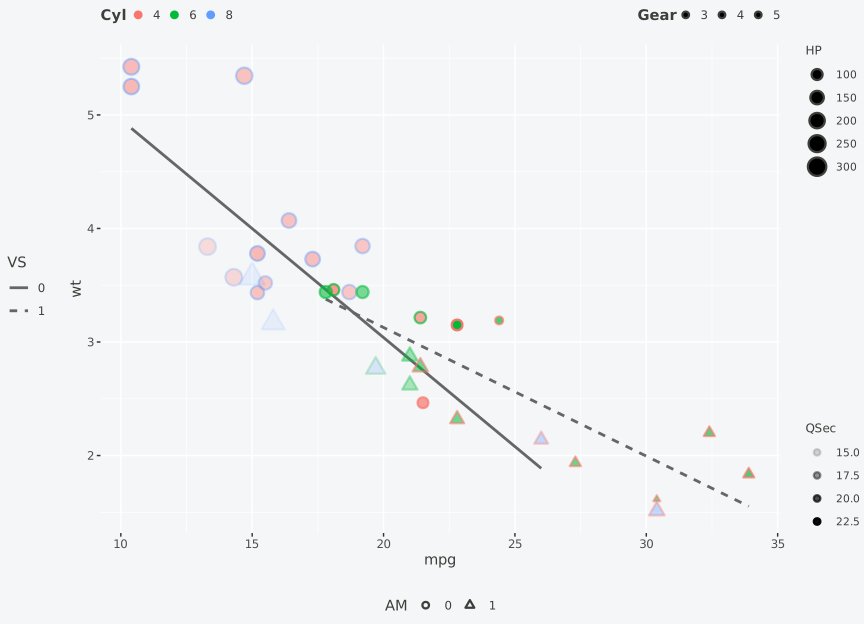
p + legend_bottom() + legend_style(background = "grey95")Six legends on four sides, each one positioned and styled independently. ggplot2 lets several legends share a side; ggguides lets you pick which legend goes where, slide it along the rail, and style it without touching the others.
p6 +
  # Side placement. Two legends share the top rail, two share the right.
  legend_top(by = "colour")    + legend_top(by = "fill")     +
  legend_right(by = "size")    + legend_right(by = "alpha")  +
  legend_bottom(by = "shape")  + legend_left(by = "linetype") +

  # Slide each one along its rail.
  legend_style(by = "colour",   justification = "left")   +
  legend_style(by = "fill",     justification = "right")  +
  legend_style(by = "size",     justification = "top")    +
  legend_style(by = "alpha",    justification = "bottom") +

  # Appearance (bold titles, smaller keys, smaller text, forced direction).
  legend_style(by = "colour", title_face = "bold",
               key_width = 0.4, key_height = 0.4) +
  legend_style(by = "size",   title_size = 9, size = 8)  +
  legend_style(by = "shape",  direction = "horizontal")
legend_style(by = ...) calls are additive, so one line
per parameter is the intended shape. Full walkthrough in the Multiple
Legends vignette.
Legend customization in ggplot2 often requires verbose
theme() calls with non-obvious argument names
(legend.position, legend.justification,
legend.box.just), and guide specifications scattered across
guides() and scale_*() functions. Common tasks
like positioning a legend inside the plot, styling the legend box, or
managing multiple legends require looking up documentation
repeatedly.
ggguides addresses this by providing:
legend_left(), legend_inside(),
legend_reverse())legend_left() sets position, justification,
and box alignment)install.packages("ggguides")Or install the development version from GitHub:
# install.packages("pak")
pak::pak("gcol33/ggguides")legend_left() /
legend_right(): Side positioning with proper
alignmentlegend_top() /
legend_bottom(): Horizontal layout with optional
plot alignmentlegend_inside(): Position inside plot
using coordinates or shortcuts ("topright",
"bottomleft", etc.)legend_none(): Remove legend
entirelylegend_style(): Comprehensive styling
(size, font, background, borders, margins)legend_wrap(): Wrap entries into
columns or rowslegend_reverse(): Reverse entry
orderlegend_order(): Reorder legend
entrieslegend_keys(): Customize key
appearancecolorbar_style(): Style continuous
color legendslegend_hide() /
legend_select(): Show/hide specific legends by
aestheticlegend_order_guides(): Control display
order of multiple legendslegend_merge() /
legend_split(): Combine or separate legend
entriesby parameter: Apply any function to
specific aesthetics onlycollect_legends(): Collect legends
from patchwork compositionscollect_axes(): Collect axes from
patchwork compositionsshared_legend(): Combine plots with
shared legend (no patchwork required)get_legend(): Extract legend as
standalone groblibrary(ggplot2)
library(ggguides)
p <- ggplot(mtcars, aes(mpg, wt, color = factor(cyl))) +
geom_point(size = 3) +
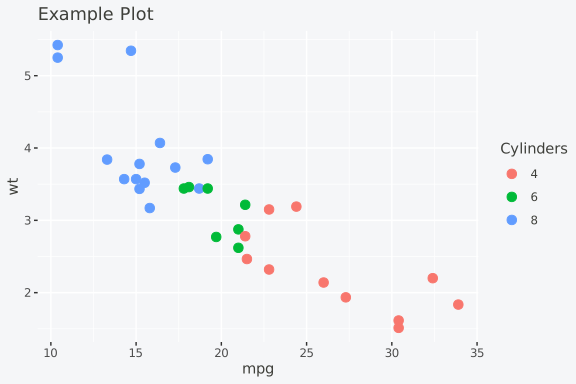
labs(color = "Cylinders")legend_left() /
legend_right()Position with proper alignment (sets justification and box.just together):
p + legend_left()
p + legend_right()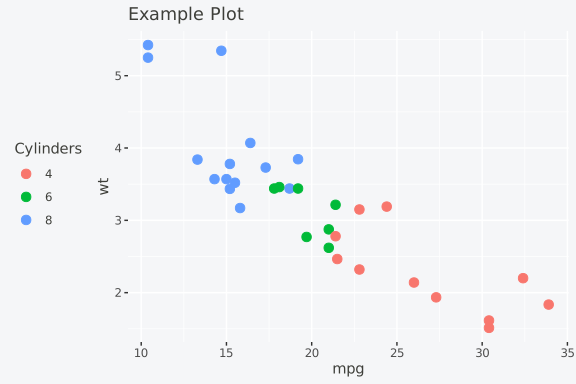
legend_top() /
legend_bottom()Horizontal layout with optional plot alignment:
p + legend_top()
p + legend_bottom()

# Align to full plot (useful with titles)
p + labs(title = "My Title") + legend_top(align_to = "plot")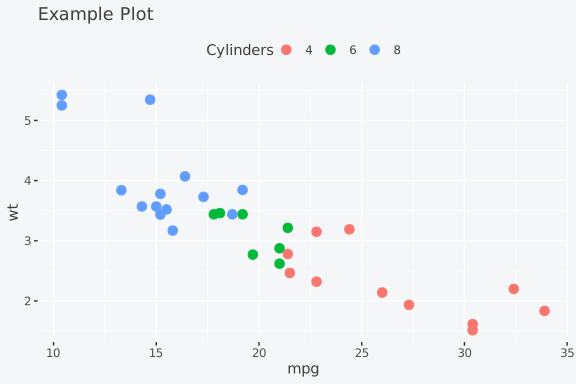
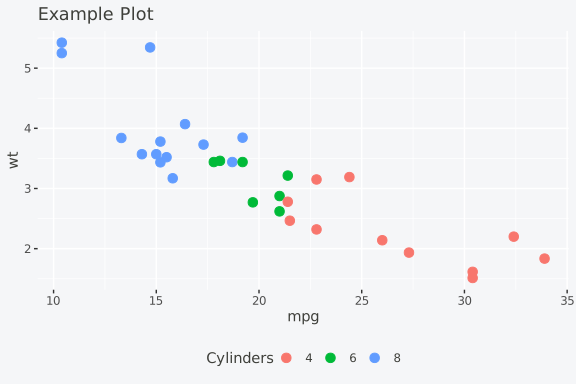
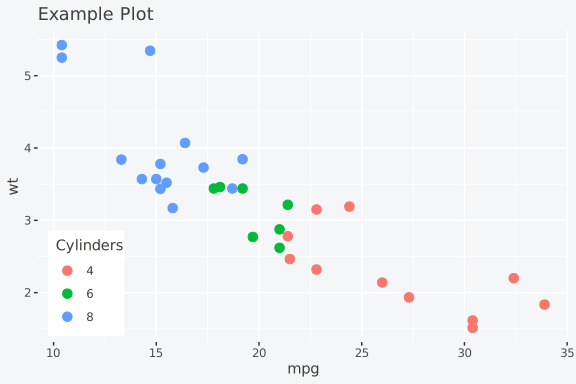
legend_inside()Position inside the plot using coordinates or shortcuts:
# Using shortcuts
p + legend_inside(position = "topright")
p + legend_inside(position = "bottomleft")

# Using coordinates
p + legend_inside(x = 0.95, y = 0.95, justification = c("right", "top"))

# With custom styling
p + legend_inside(position = "center", background = "grey95", border = "grey50")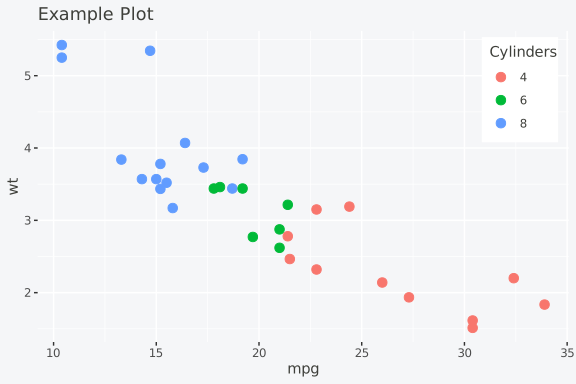
legend_none()Remove the legend entirely:
p + legend_none()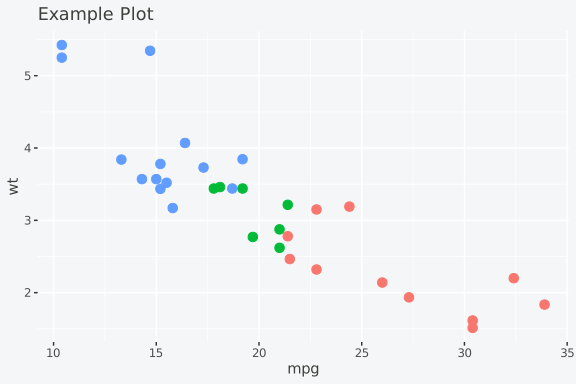
legend_style()Comprehensive styling in one call:
# Change font size - affects both title and labels
p + legend_style(size = 14)

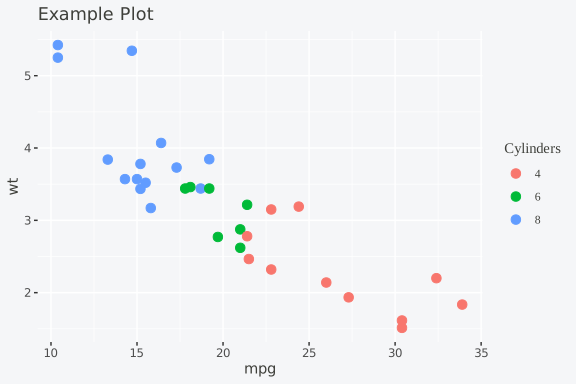
# Change font family
p + legend_style(family = "serif")
p + legend_style(family = "mono")

# Combine size and family
p + legend_style(size = 14, family = "serif")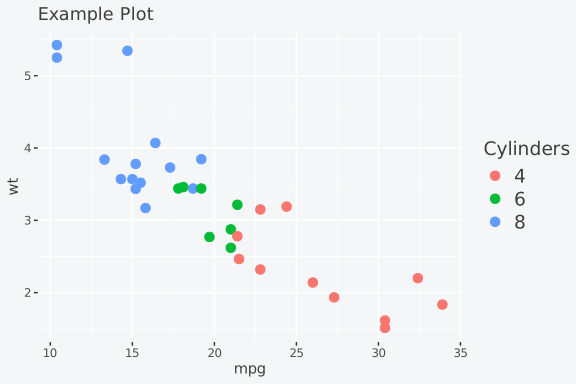
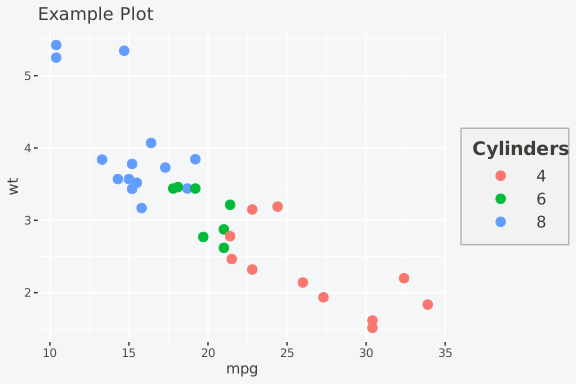
# Full styling with title emphasis
p + legend_style(
  size = 12,
  title_size = 14,
  title_face = "bold",
  key_width = 1.5,
  background = "grey95",
  background_color = "grey70",
  margin = 0.3
)
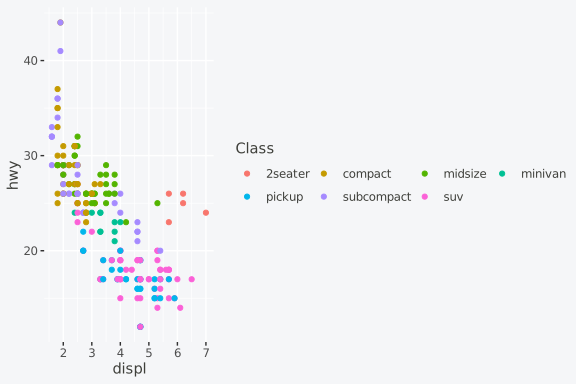
legend_wrap()Wrap legend entries into columns or rows:
ggplot(mpg, aes(displ, hwy, color = class)) +
  geom_point() +
  legend_wrap(ncol = 2)

# Or by rows
ggplot(mpg, aes(displ, hwy, color = class)) +
  geom_point() +
  legend_wrap(nrow = 2)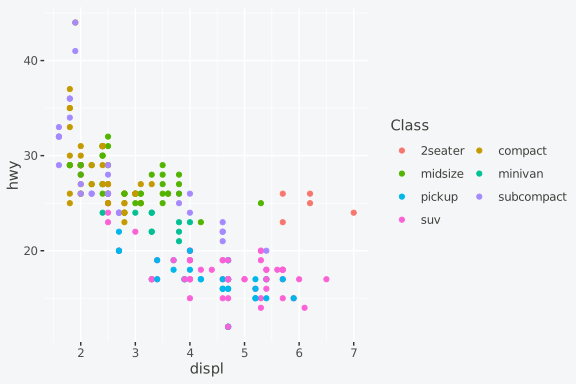
legend_reverse()Reverse legend entry order:
p + legend_reverse()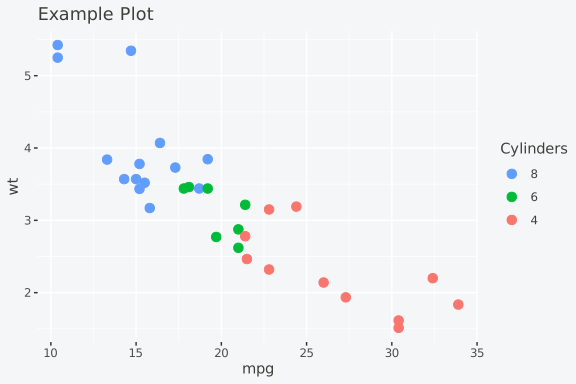
When a plot has multiple aesthetics, control each legend separately:
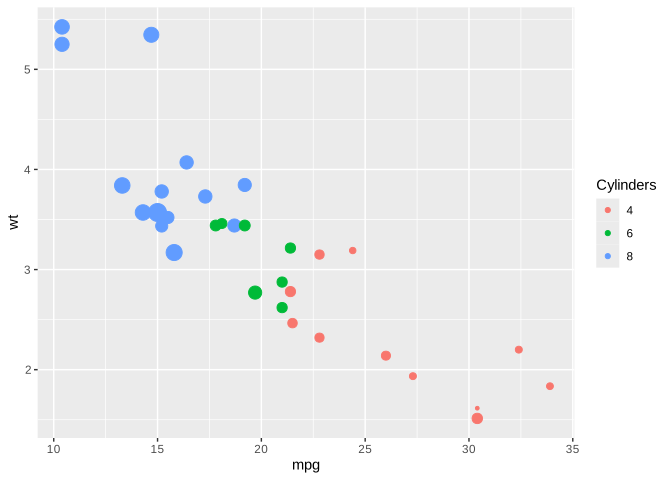
legend_hide() /
legend_select()Hide specific legends or keep only certain ones:
# Plot with multiple aesthetics
p <- ggplot(mtcars, aes(mpg, wt, color = factor(cyl), size = hp)) +
  geom_point() +
  labs(color = "Cylinders", size = "Horsepower")

# Hide the size legend
p + legend_hide(size)

# Keep only the colour legend
p + legend_select(colour)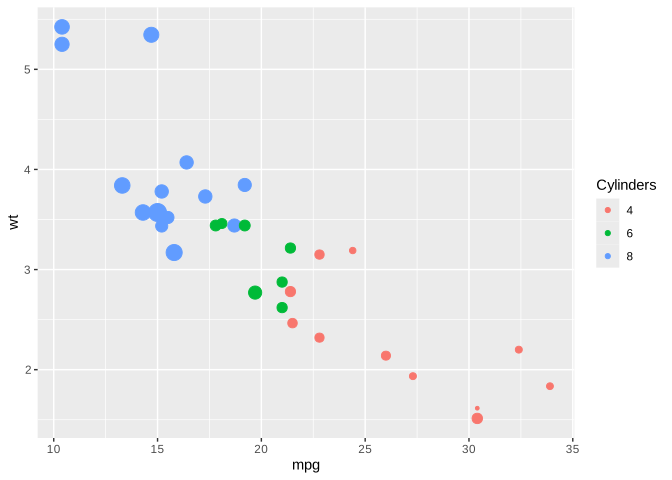
Use the by parameter to position legends
independently:
# Colour legend on left, size legend at bottom
p +
  legend_left(by = "colour") +
  legend_bottom(by = "size")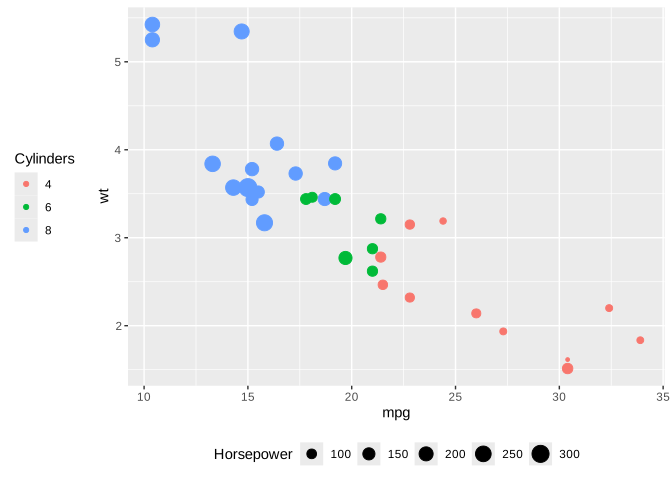
Apply different styles to different legends:
p +
  legend_style(title_face = "bold", by = "colour") +
  legend_style(size = 10, by = "size")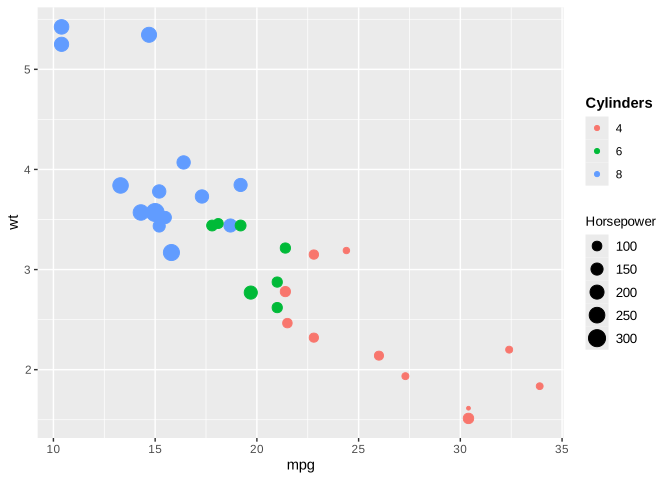
legend_order_guides()Control the display order of multiple legends:
# Size legend first, then colour
p + legend_order_guides(size = 1, colour = 2)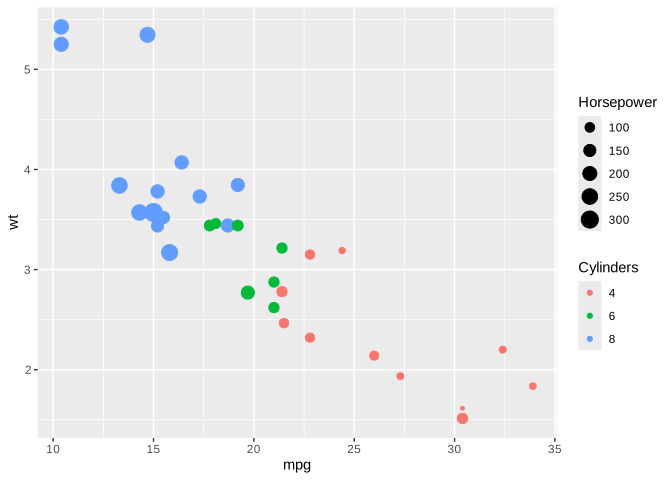
collect_legends()Collect legends from patchwork compositions:
library(patchwork)

p1 <- ggplot(mtcars, aes(mpg, wt, color = factor(cyl))) +
  geom_point() + labs(title = "Plot 1")
p2 <- ggplot(mtcars, aes(mpg, hp, color = factor(cyl))) +
  geom_point() + labs(title = "Plot 2")

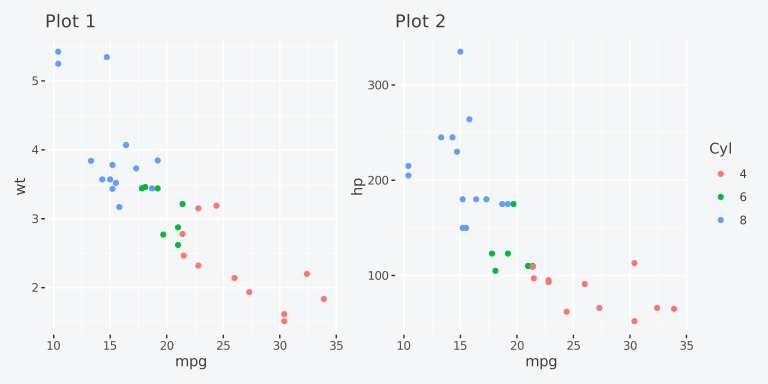
# Without collection (duplicate legends)
p1 | p2

# With collection
collect_legends(p1 | p2)

# Position at bottom
collect_legends(p1 | p2, position = "bottom")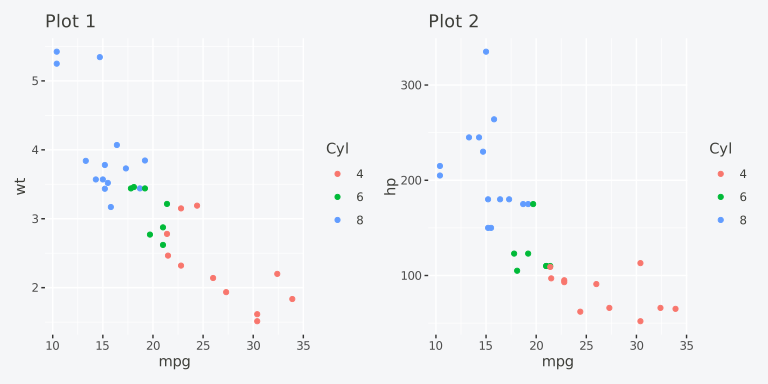
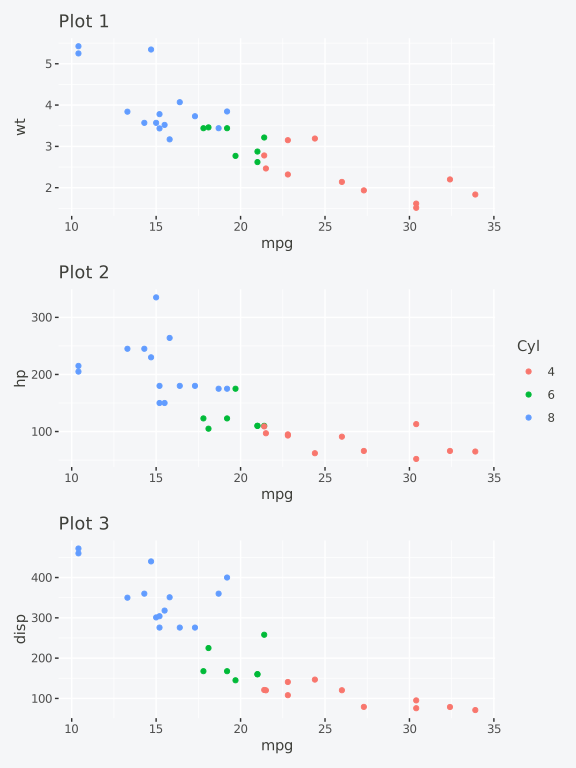
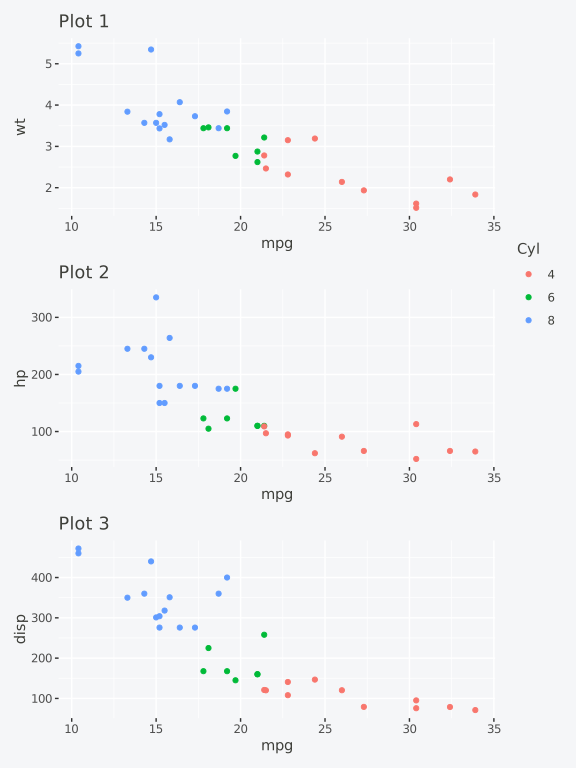
For stacked plots, use span = TRUE to make the legend
span the full height. Using different plot heights makes the spanning
behavior more visible:
library(patchwork)

p3 <- ggplot(mtcars, aes(mpg, disp, color = factor(cyl))) +
  geom_point() + labs(title = "Plot 3")

# Stack with different heights: 4, 2, 1
stacked <- (p1 / p2 / p3) + plot_layout(heights = c(4, 2, 1))

# Default: legend centered
collect_legends(stacked, position = "right")

# With spanning: legend fills full height
gt <- collect_legends(stacked, position = "right", span = TRUE)
grid::grid.draw(gt)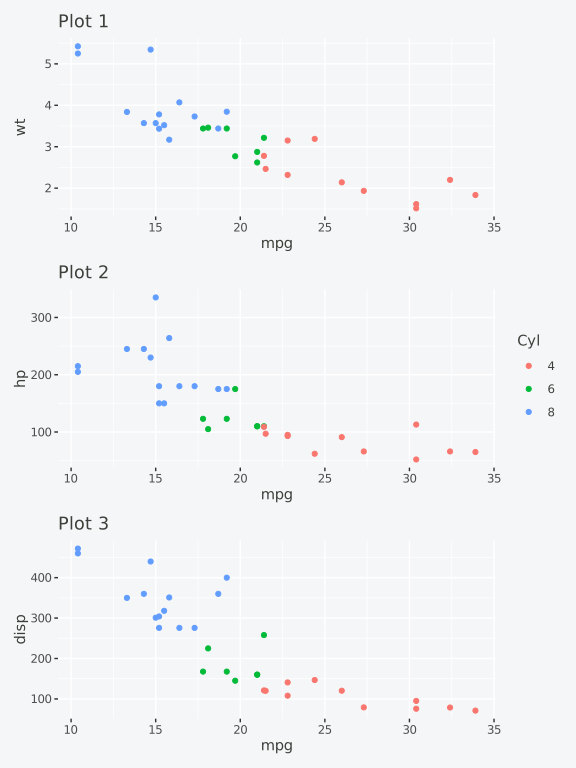
Attach the legend to specific rows instead of spanning all:
# Attach legend to row 1 only (the tallest plot)
gt <- collect_legends(stacked, position = "right", span = 1)
grid::grid.draw(gt)

# Attach legend to rows 1 and 2
gt <- collect_legends(stacked, position = "right", span = 1:2)
grid::grid.draw(gt)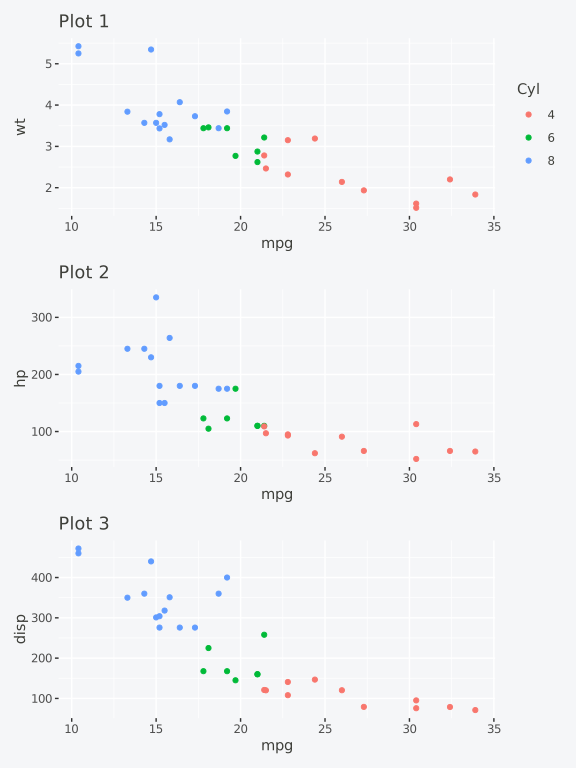
Functions compose naturally:
ggplot(mpg, aes(displ, hwy, color = class)) +
  geom_point() +
  legend_left() +
  legend_style(size = 12, title_face = "bold", background = "grey95")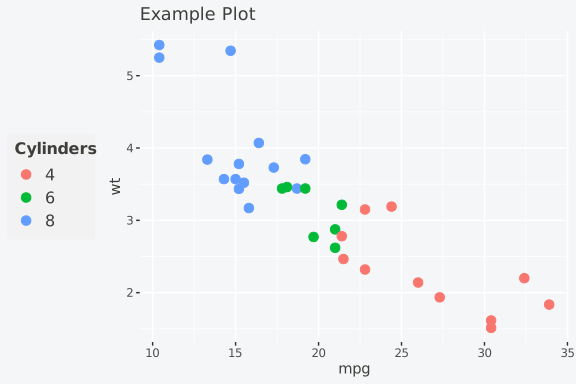
ggplot(mpg, aes(displ, hwy, color = class)) +
  geom_point() +
  legend_wrap(ncol = 2) +
  legend_bottom()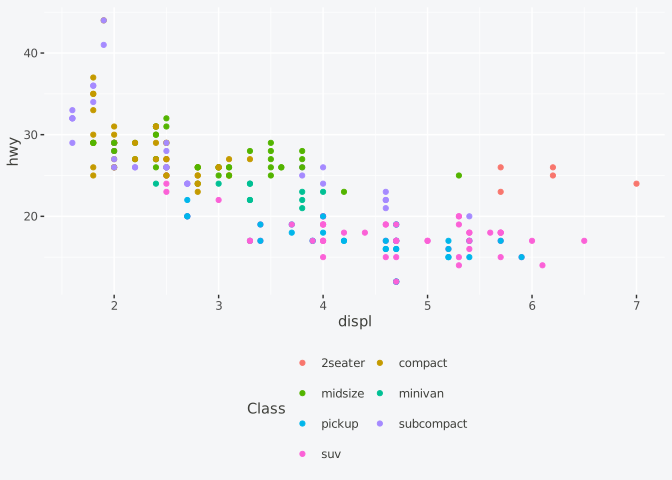
ggguides also works without patchwork for cowplot users or anyone using base grid:
get_legend()Extract a legend as a standalone grob:
p <- ggplot(mtcars, aes(mpg, wt, color = factor(cyl))) +
  geom_point() + labs(color = "Cylinders")

# Extract the legend
leg <- get_legend(p)

# Use with cowplot::plot_grid() or grid::grid.draw()
grid::grid.draw(leg)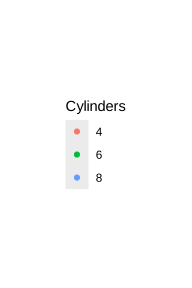
shared_legend()Combine plots with a shared legend (no patchwork required):
p1 <- ggplot(mtcars, aes(mpg, wt, color = factor(cyl))) +
  geom_point() + labs(title = "Plot 1", color = "Cylinders")
p2 <- ggplot(mtcars, aes(mpg, hp, color = factor(cyl))) +
  geom_point() + labs(title = "Plot 2", color = "Cylinders")
p3 <- ggplot(mtcars, aes(mpg, disp, color = factor(cyl))) +
  geom_point() + labs(title = "Plot 3", color = "Cylinders")

# Side-by-side with shared legend
gt <- shared_legend(p1, p2, ncol = 2, position = "right")
grid::grid.draw(gt)

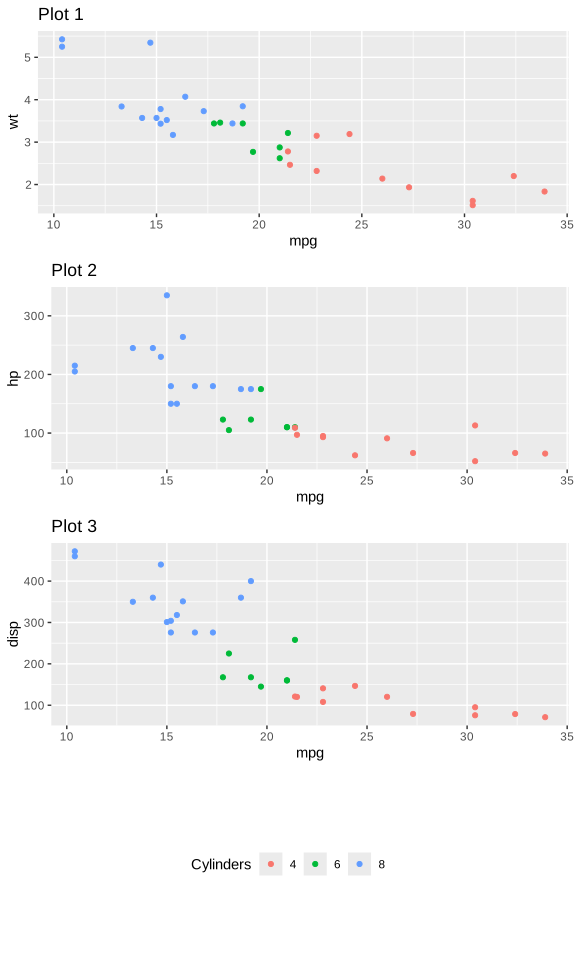
# Stacked with legend at bottom
gt <- shared_legend(p1, p2, p3, ncol = 1, position = "bottom")
grid::grid.draw(gt)

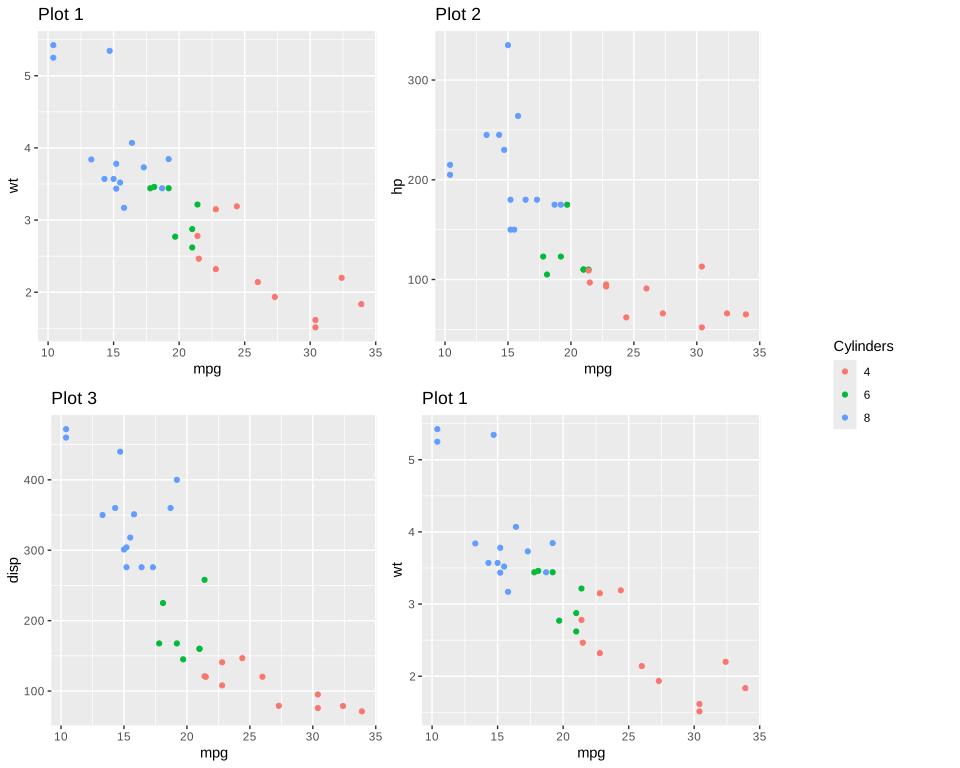
# 2x2 grid
gt <- shared_legend(p1, p2, p3, p1, ncol = 2, nrow = 2, position = "right")
grid::grid.draw(gt)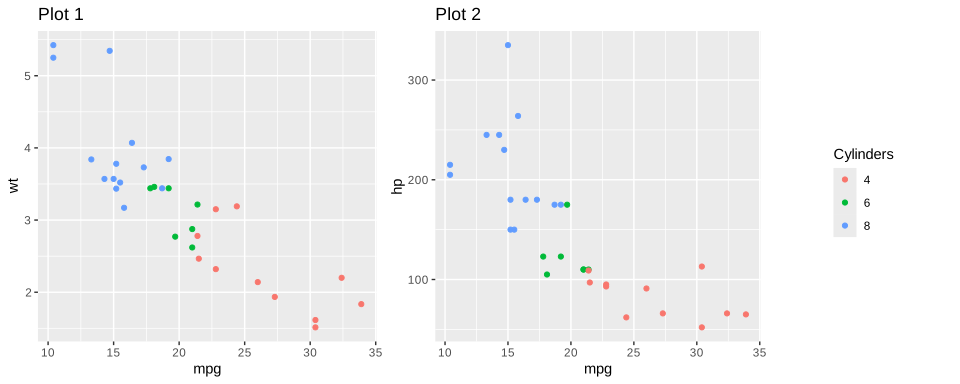
All ggguides styling functions (legend_style(),
legend_wrap(), etc.) work on individual plots regardless of
layout package.
“Software is like sex: it’s better when it’s free.” — Linus Torvalds
I’m a PhD student who builds R packages in my free time because I believe good tools should be free and open. I started these projects for my own work and figured others might find them useful too.
If this package saved you some time, buying me a coffee is a nice way to say thanks. It helps with my coffee addiction.
MIT (see the LICENSE.md file)
@software{ggguides,
  author = {Colling, Gilles},
  title = {ggguides: Simplified Legend and Guide Alignment for ggplot2},
  year = {2025},
  url = {https://CRAN.R-project.org/package=ggguides},
  doi = {10.32614/CRAN.package.ggguides}
}